China Top Aluminium Windows and Doors Manufacturers?

Time:2026-11-18 Author:Aria
0%

Choosing China’s top Aluminium Windows & Doors manufacturers requires more than comparing glossy catalogues. Product quality shows in details: a tight corner joint, a smooth-running handle, and seals that remain compressed after repeated use. The International Energy Agency’s 2023 Global Status Report for Buildings and Construction estimates that buildings use about 30% of global final energy and produce 26% of energy-related emissions. Windows are only one part of that picture, but their design and installation can affect comfort and energy performance. Building scientist Joseph Lstiburek has put the challenge bluntly: “Windows are holes in walls.” The line is memorable. It is also a useful reminder to examine the whole assembly, not just the frame.

This guide looks at Chinese manufacturers through practical checks: material specifications, thermal and weather-test evidence, finish consistency, customization, lead times, and after-sales support. Ask for test reports tied to the exact window system being quoted; a general brochure is not enough. Check how the company handles drainage paths, hardware, and installation guidance. These details are easy to overlook. A low quote may still fit a project, but only when its limits are clear. Rankings can simplify a complicated market, and they should not replace sample reviews or factory due diligence. The aim here is a credible shortlist, not a promise that one supplier suits every building, climate, or budget.
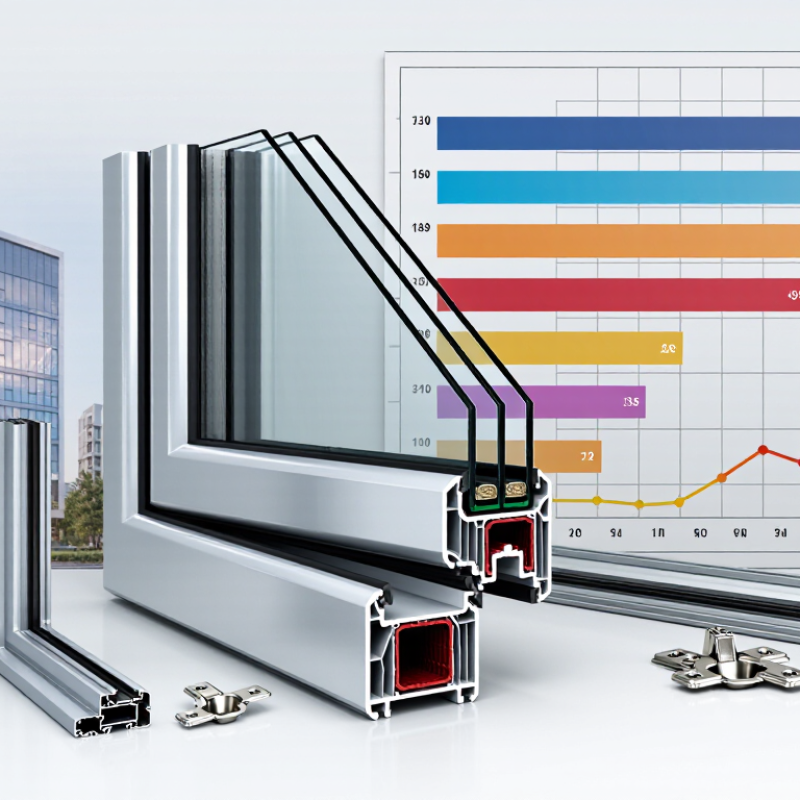
China Top Aluminium Windows and Doors Manufacturers?

China’s Aluminium Window and Door Manufacturing Industry

China’s Aluminium Window and Door Manufacturing Industry

China’s aluminium window and door sector sits within a vast materials and construction ecosystem. World Aluminium reported about 41.5 million tonnes of Chinese primary aluminium production in 2023, roughly three-fifths of global output. This scale supports broad access to billet, extrusion, and finishing capacity, but it does not guarantee consistent product quality. Buyers still need to assess alloy certificates, profile-wall thickness, coating uniformity, and production traceability.

Construction activity shapes demand. China’s National Bureau of Statistics recorded 998.31 million square metres of completed building floor area in 2023. That figure signals a large installation base, though it is not a direct measure of window and door sales. Manufacturers typically combine extruded frames with thermal breaks, insulated glass units, seals, and hardware. Factory checks may include dimensional inspection and air- and water-resistance testing. Small details matter. A poorly seated gasket can undermine an otherwise solid frame. National production volume looks impressive, but it cannot prove an individual factory’s reliability.

How Leading Manufacturers Are Identified

Identifying leading manufacturers requires more than comparing catalogue claims or export volume. The 2023 Global Status Report for Buildings and Construction, published by UNEP and GlobalABC, estimates that buildings used 34% of global energy demand in 2022. This makes verified insulation performance relevant, but it does not prove that any single window system will deliver the same savings in every building. Buyers should compare independently tested thermal transmittance, air leakage, water penetration, and wind resistance. Ask for complete test reports, including product dimensions and test conditions. A polished sample is not enough.

Factory checks matter too. Review alloy and thermal-break traceability, production records, quality-control procedures, and access to replacement hardware. The International Aluminium Institute says recycled aluminium can require about 5% of the energy used to produce primary aluminium. That figure can inform material discussions, but it is not a substitute for verified recycled-content records. Numbers help. Still, no scorecard is perfect. A practical assessment may include a factory audit and inspection of finished units, such as checking corner joints, drainage paths, and hardware operation. Some suppliers may have impressive certifications yet uneven batch consistency; that deserves a closer look. Compare evidence on the same basis, and treat unsupported performance claims cautiously.

Major Manufacturers and Their Product Specialties

China’s aluminium window and door manufacturers often specialize by system type rather than making every product equally well. Some focus on thermal-break windows, using polyamide strips between aluminium profiles to reduce heat transfer. Others concentrate on sliding doors, curtain-wall systems, or slim-frame designs for high-rise projects. Coating choices also vary: powder-coated finishes suit many exterior applications, while anodized surfaces offer a distinct metallic appearance. Details matter.

The International Energy Agency’s 2023 Global Status Report for Buildings and Construction estimates that buildings account for about 30% of global final energy use and 26% of energy-related emissions. That makes glazing performance more than a design detail. Buyers should compare the complete window configuration, including glass layers, frame depth, seals, and hardware. A thermal-break profile alone does not guarantee strong insulation.

Manufacturers serving commercial projects may emphasize curtain-wall engineering, larger panel sizes, and documented air, water, and wind-pressure testing. Residential specialists may offer more sliding configurations, insect screens, and finishes matched to local interiors. Ask for test reports that match the exact product being quoted. Catalog figures can look reassuring. They may not reflect your installation. This distinction is useful, but not perfect: workmanship and site conditions can still change real-world performance.

Common Product Types and Application Areas

China’s aluminium window and door market serves homes, offices, retail spaces, and industrial buildings. Common products include sliding doors for balconies, casement windows for bedrooms, and thermally broken systems for exterior walls. Their uses differ. Sliding units save swing space, while casement frames can provide wide openings for ventilation. Large commercial façades often use curtain-wall systems, where frame design, glass weight, wind exposure, and drainage must be assessed together.

Application conditions matter as much as frame type. Coastal homes may need durable surface finishes, while high-rise projects require careful attention to wind pressure and fixing details. The Global Alliance for Buildings and Construction’s 2024 Global Status Report says buildings account for 32% of global energy demand and 34% of energy-related CO₂ emissions. That context makes insulation and airtightness important, though window performance also depends on glazing, installation, and climate. A strong frame alone is not enough.

A tidy catalog can mislead. For renovation projects, installers should check opening sizes, sill conditions, and water paths before selecting a replacement. Commercial buyers may prioritize large glazed areas; homeowners may prefer easy cleaning and secure operation. There is no universal best type. Even a technically suitable product can disappoint if site measurements or installation details are rushed.

China Top Aluminium Windows and Doors Manufacturers? - Common Product Types and Application Areas

Product Type Typical Configuration Common Application Areas Key Selection Considerations
Thermal-Break Casement Window Hinged sash opening inward or outward; insulated aluminium frame; single, double, or triple glazing depending on project requirements. Apartments, houses, offices, and other buildings where ventilation and a close sash seal are priorities. Check frame thermal-break design, glazing specification, hardware, drainage, air and water performance, and installation details.
Aluminium Sliding Window One or more panels slide horizontally along tracks; available with non-thermal-break or thermal-break frames. Balconies, compact rooms, kitchens, and projects where a swinging sash would take up usable space. Assess track quality, sash weight limits, locking points, weather seals, drainage, and the amount of clear opening required.
Tilt-and-Turn Window A multi-point hardware system allows the sash to tilt inward for limited ventilation or swing inward for access and cleaning. Residential buildings, upper floors, and projects seeking flexible ventilation and convenient interior-side cleaning. Confirm hardware compatibility, sash size and weight, operating clearance, safety requirements, and maintenance access.
Lift-and-Slide Door Large sliding panels lift slightly during operation and lower onto seals when closed; often specified with insulated glazing. Patios, terraces, balconies, and living areas with wide openings and a need for broad outdoor views. Check panel dimensions and weight, threshold design, operating hardware, drainage, glazing safety, and project-specific weather performance.
Aluminium Bi-Fold Door Multiple hinged panels fold and stack to one or both sides of an opening; configurations vary by panel count and stacking direction. Residential patios, garden rooms, cafés, and other spaces where a wide opening is useful. Review panel width and weight, running track, stacking space, threshold accessibility, locking, and seals at panel joints.
Aluminium Entrance Door Single- or double-leaf hinged door, commonly supplied with a glazed or solid infill and a multipoint locking system. Residential entrances, apartment buildings, offices, and commercial premises. Consider security hardware, door closer requirements, accessibility, threshold details, finish durability, and applicable fire or egress requirements.
Aluminium Curtain Wall Non-load-bearing exterior façade system with aluminium framing and infill panels, commonly glass; system design may be stick-built or unitized. Commercial offices, hotels, public buildings, and high-rise façades. Coordinate structural movement, wind loads, fire-safety design, water management, access for maintenance, and façade-system testing.
Fixed Aluminium Window Non-opening glazed frame, often combined with operable windows or doors in the same façade. Living rooms, stairwells, commercial façades, and locations where daylight or views are needed without operable ventilation. Specify suitable glass for safety, solar control, thermal performance, and noise reduction; plan safe cleaning access.

How to Assess Suppliers and Verify Credentials

Assess a supplier through documents and production evidence, not a polished catalogue. Check its Chinese business licence, factory address, and the legal entity named on quotations and contracts. Verify any ISO 9001 certificate with the issuing body, including its scope and expiry date. Details matter.

Ask for test reports tied to the actual window system: frame profile, glass build-up, hardware, and dimensions. A report for a different configuration may not predict your project’s results. For Chinese aluminium windows, check whether testing references GB/T 8478-2020; export projects may require additional market-specific tests. Confirm laboratory accreditation and contact the laboratory directly when report details are unclear. Look closely.

Material and environmental records also deserve scrutiny. Request alloy-grade certificates, coating-thickness results, and batch-level traceability, then compare them with delivered samples. The IEA’s 2023 Aluminium report estimates that aluminium production contributes about 2% of global CO2 emissions. That makes verified recycled-content and energy data useful when evaluating environmental claims. One weakness in this process: paperwork can look complete while factory controls remain inconsistent. A live production-line audit, sample inspection, and a small trial order can reveal gaps before larger commitments.

China Aluminium Windows and Doors: A Supplier Verification Benchmark

EN 12210 wind-resistance classes specify these nominal test pressures. Use them as a reference when checking whether a supplier’s test report matches the performance required for your project.

Ask for a test report for the exact window or door configuration being offered, and verify the report issuer and accreditation. Class values are standard classifications, not ratings of any particular manufacturer.

FAQS

How large is China’s aluminium supply base?

China produced about 41.5 million tonnes of primary aluminium in 2023, roughly three-fifths of global output. This supports broad material availability, but says little about one factory’s quality.

Does completed building floor area show window and door sales?

China recorded 998.31 million square metres of completed building floor area in 2023. It suggests a large installation base, not direct sales figures.

Which performance tests should buyers request?

Ask for independently tested thermal transmittance, air leakage, water penetration, and wind resistance. Reports should show product dimensions and test conditions. A glossy sample is not enough.

Which details are worth checking on finished units?

Inspect corner joints, drainage paths, seals, and hardware operation. Small details matter. A poorly seated gasket can weaken an otherwise sturdy frame.

Does high production capacity guarantee consistent quality?

No. Review alloy certificates, profile-wall thickness, coating uniformity, and production records. Large output is not proof.

How can buyers assess factory quality control?

Review traceability for alloys and thermal breaks, inspection procedures, and access to replacement hardware. A factory audit can help, though it cannot catch everything.

What does the recycled-aluminium energy comparison mean?

Recycled aluminium may require about 5% of the energy used for primary aluminium. Treat this as context, not proof of recycled content. Request verified records.

Are certifications enough to identify a reliable manufacturer?

Not always. Some suppliers may hold strong certifications yet show uneven batch consistency. Compare evidence carefully, and inspect actual units where possible. No scorecard is perfect.

Conclusion

China’s aluminium window and door industry serves a wide range of residential, commercial, and industrial projects, combining established manufacturing capacity with varied design and performance options. Leading manufacturers can be assessed by their production experience, quality-control processes, material choices, customization capabilities, delivery reliability, and ability to provide clear technical information. Their specialties may include thermal-break systems, sliding and casement designs, curtain-wall solutions, and products tailored to different climates and building requirements.

Common applications range from homes and apartment buildings to offices, retail spaces, and larger developments. When comparing suppliers, buyers should review product specifications, samples, factory capabilities, testing documentation, and relevant quality credentials. It is also useful to confirm the scope of customization, installation support, warranty terms, and communication practices before making a decision. A careful evaluation helps identify an Aluminium Windows & Doors supplier whose products and service are suitable for the project’s needs.

Aria

Aria

Aria is a dedicated marketing professional with a deep passion for innovative strategies and a keen understanding of our company's product offerings. With a wealth of experience in the industry, Aria excels at crafting engaging content that highlights the unique features and benefits of our......