Choosing among China’s top aluminum bathroom door manufacturers requires more than comparing prices and polished catalog images. A dependable Aluminum Bathroom Door should handle humidity, repeated opening, cleaning chemicals, and uneven bathroom temperatures. This guide introduces manufacturers through practical selection criteria, including material quality, fabrication experience, design flexibility, production control, and after-sales support.
The evaluation focuses on aluminum alloy grades, surface treatments, hardware performance, glass compatibility, and sealing details. A well-built door should close smoothly, resist visible corrosion, and maintain its alignment after frequent use. Factory audits, sample inspections, and clear technical drawings can reveal more than marketing claims. Ask for production photos, test records, packaging details, and references from comparable projects. Small details matter. Hinges, drainage gaps, corner joints, and protective films often determine long-term performance.
However, no supplier is flawless. A strong website does not prove consistent manufacturing quality. Even an experienced factory may struggle with custom colors, tight delivery schedules, or complex installation conditions. Buyers should confirm tolerances, warranty terms, replacement procedures, and communication responsibilities before placing an order. Regional bathroom habits and building requirements also deserve attention. A door designed for a dry hotel project may perform differently in a constantly wet residential bathroom.
This article compares promising Chinese manufacturers using evidence-based considerations rather than popularity alone. It aims to help importers, contractors, designers, and homeowners make a more informed decision. Experience remains valuable, but verification matters more. That is where careful sourcing begins.
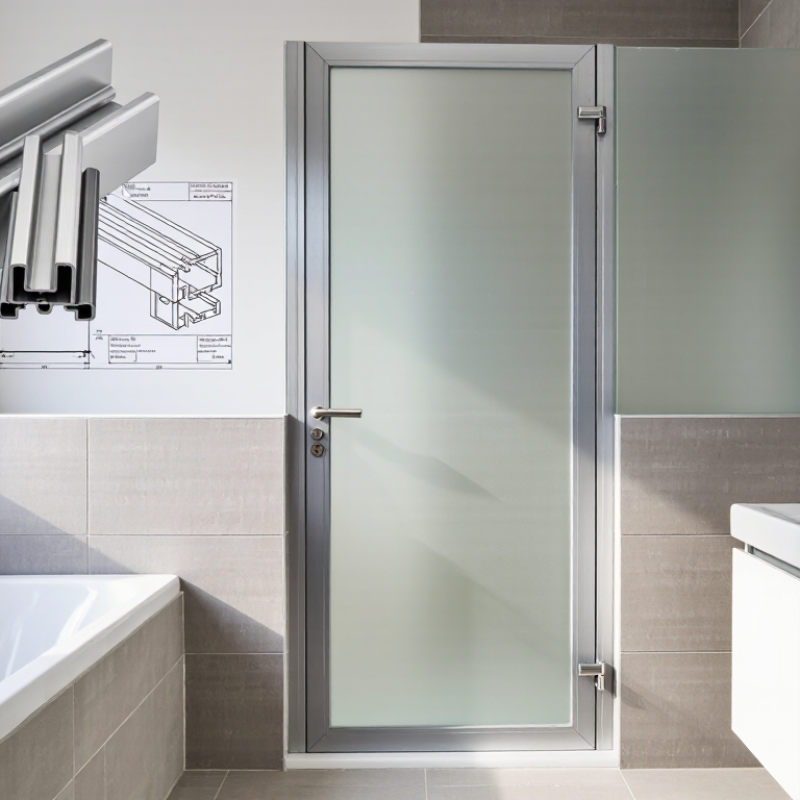
Aluminum bathroom door manufacturing in China has grown around practical needs: moisture resistance, compact spaces, and stable production costs. Factories commonly use aluminum profiles, tempered glass, stainless steel hardware, and rubber sealing strips. Powder coating and anodizing provide different surface finishes. Each process affects color consistency, scratch resistance, and maintenance.
The market is not uniform. Experienced manufacturers control profile thickness, corner joints, drainage gaps, and hinge alignment during production. They usually inspect incoming materials, assemble trial units, and test doors through repeated opening cycles. A reliable supplier should provide material records, dimensional drawings, coating details, and transparent quality procedures. Factory audits also matter. Clean assembly areas and organized storage often reveal more than attractive showroom samples.
Bathroom doors require careful communication between designers, installers, and manufacturers. Measurements must include wall conditions, floor slopes, ventilation, and threshold height. Export projects may also require compliance with destination building codes and safety requirements. Not every polished sample reflects stable mass production. This remains a common weakness. Buyers should request pre-production samples, confirm packaging protection, and inspect random finished units before shipment. Small details matter: a two-millimeter gap can affect water control, while poorly protected edges may arrive damaged. Cost should be reviewed alongside service life, replacement parts, lead time, and after-sales support.
When evaluating China’s top aluminum bathroom door manufacturers, focus on measurable quality, not polished catalogs. A high-quality door should use architectural-grade aluminum, commonly 6063 alloy, with consistent wall thickness and accurate extrusion. Poor tolerances create uneven gaps, rattling panels, and weak hardware connections.
Moisture resistance is essential. Look for powder coating tested under recognized standards, such as AAMA 2604 or AAMA 2605. These specifications address coating performance, including adhesion, color retention, and corrosion resistance.
Stainless steel hinges, screws, and rollers should resist bathroom humidity. Grade 304 may suit many interiors, while 316 offers stronger resistance in coastal environments.
One detail is easy to miss: drainage paths at the bottom frame. Without them, trapped water can stain surfaces and weaken seals.
Safety glass matters too. Tempered glass should comply with applicable standards, such as EN 12150 or ASTM C1048. Ask for test reports, material certificates, coating data, and production inspection records.
The International Aluminium Institute reports that recycling aluminum can save up to 95% of the energy required for primary production. That supports aluminum’s sustainability case, but recycled content must still be verified.
A glossy finish alone proves little. I would request corner samples, cycle-testing results, and dimensional records before approving a large order.
Some suppliers may provide excellent samples, yet inconsistent batch control remains a practical concern.
China Top Aluminum Bathroom Door Manufacturers?
Choosing a Chinese bathroom door manufacturer requires more than comparing online prices. Factory evidence matters. Request a live video tour or an independent factory audit. Check whether aluminum profiles, glass, seals, and hardware are produced consistently. A clean showroom is not enough. Ask for production photos, equipment details, and recent quality records.
Evaluate material and process carefully. Confirm the aluminum grade, profile thickness, surface treatment, and moisture resistance. Request a sample before approving bulk production. Measure its frame joints, door alignment, hinge movement, and seal compression. Place the sample beside a shower area if possible. Small gaps often reveal larger process problems. Ask how the manufacturer controls color differences between production batches. Require clear inspection standards, packaging details, lead times, and replacement procedures.
Communication also shows operational maturity. A reliable team answers technical questions directly and records agreed specifications. Check whether drawings, invoices, and test reports match the actual product. Payment terms and warranty conditions should be written clearly. One weakness in my evaluation process is relying too heavily on fast replies. Quick communication can hide weak follow-up. I now compare promised dates with previous delivery records and request photographs before shipment. This extra step feels slow, but it exposes careless packing, unfinished edges, and missing accessories. Supplier selection should depend on verified performance, not attractive claims.
China Top Aluminum Bathroom Door Manufacturers?
Customization, Certifications, and Production Capabilities
Reliable aluminum bathroom door manufacturers should turn drawings into consistent, tested products. Custom options may include frame dimensions, profile thickness, surface finishes, glass types, hinges, handles, and privacy panels. Powder coating and anodizing need controlled pretreatment. Otherwise, attractive finishes may fail in humid bathrooms. A capable factory can provide prototypes before mass production. This step exposes fitting problems early.
Certifications deserve careful checking. Ask for current ISO 9001 quality documents, material certificates, coating test results, and glass safety reports where applicable. Documents should identify the factory, product, test method, and validity period. A certificate alone proves little. Factory audits, sample inspections, and batch traceability offer stronger evidence. I would also verify whether testing covers the exact door design, not just a similar model.
Production capability includes aluminum extrusion access, CNC cutting, drilling, assembly, packaging, and final inspection. Some manufacturers outsource key processes, which can affect deadlines and consistency. Request monthly capacity, minimum order quantities, tooling costs, and realistic lead times. Check how workers measure diagonal gaps, seal alignment, and hardware movement. Small defects become obvious in a wet room. Factory photos help, but they are not enough. A live video inspection or independent quality check is wiser. Even experienced suppliers can miss details, especially during customized orders. That risk should be discussed openly.
Comparing China’s Leading Aluminum Bathroom Door Suppliers
China offers a deep aluminum supply base. The International Aluminium Institute reported that China produced over 40 million tonnes of primary aluminum in 2023, exceeding half of global output. This capacity supports competitive pricing, faster profile development, and flexible bathroom-door customization. However, large production volume does not guarantee reliable doors. Buyers should compare 6063-T5 aluminum certificates, frame-wall thickness, hinge load tests, and moisture-resistant hardware. A strong supplier can provide traceable batch records, coating inspection results, and clear replacement procedures.
Surface treatment deserves close attention. Anodizing and powder coating must resist steam, soap residue, and repeated cleaning. Suppliers should disclose coating standards and test methods, rather than showing only attractive showroom samples. Ask for salt-spray results, color consistency records, and water-leakage testing. The International Organization for Standardization links quality management with documented process control, so ISO 9001 certification can support confidence, but it is not proof of every product’s quality. A factory visit remains useful. See the assembly line.
Cost comparisons can also mislead. A lower quotation may exclude tempered-glass thickness, packaging protection, installation guides, or spare rollers. Leading suppliers usually differ in engineering support, minimum order quantities, mold charges, and delivery stability. One weakness in this comparison is limited visibility into long-term field performance. I would request project references and inspect doors after one year of daily bathroom use. Even then, local water hardness and cleaning habits may change the results. Reliability requires evidence, not polished photographs.
| Evaluation Dimension | Supplier Profile A Large-Scale Export Factory |
Supplier Profile B Mid-Sized Custom Manufacturer |
Supplier Profile C Project-Oriented Fabricator |
Supplier Profile D Retail and Private-Label Supplier |
Supplier Profile E Specialized Door Manufacturer |
|---|---|---|---|---|---|
| Typical Product Range | Aluminum swing doors, sliding doors, shower doors, partitions, and standard bathroom doors | Customized aluminum bathroom doors, narrow-frame doors, sliding systems, and made-to-order profiles | Bathroom doors, apartment doors, hotel renovation doors, and coordinated interior aluminum systems | Ready-to-order bathroom doors, semi-custom sizes, replacement doors, and online retail packaging | Thermal-break or insulated aluminum doors, premium wet-area doors, and corrosion-resistant systems |
| Common Aluminum Alloys | 6063-T56063-T6 | 6063-T56061-T6 | 6063-T56061-T6 | 6063-T5 | 6063-T56061-T6 |
| Common Surface Treatments | Powder coating, anodizing, electrophoresis, and wood-grain transfer | Powder coating, anodizing, brushed finishes, and custom color matching | Powder coating, anodizing, fluorocarbon coating, and project-specific finishes | Powder coating and standard anodized finishes | Anodizing, powder coating, electrophoresis, and premium textured finishes |
| Typical Door Thickness | 30–50 mm, depending on the panel and frame design | 30–50 mm, with custom thickness options | 35–60 mm for project applications | 30–45 mm for standard models | 40–70 mm for insulated or reinforced constructions |
| Typical Door Width and Height | Width: 600–1,000 mm; height: 1,900–2,400 mm | Width: 550–1,200 mm; height: 1,800–2,600 mm | Width: 600–1,500 mm; height: 1,900–3,000 mm | Width: 600–900 mm; height: 1,900–2,200 mm | Width: 600–1,200 mm; height: 1,900–2,600 mm |
| Glass and Panel Options | Tempered safety glass, frosted glass, laminated glass, aluminum panels, and PVC panels | Tempered glass, laminated glass, decorative glass, aluminum honeycomb panels, and composite panels | Tempered or laminated safety glass, solid panels, and project-matched infill materials | Tempered glass, frosted glass, PVC panels, and standard aluminum panels | Tempered or laminated safety glass, insulated glass, aluminum panels, and moisture-resistant composites |
| Hardware Configuration | Stainless-steel hinges, handles, rollers, locks, seals, and adjustable fittings | Hardware selected according to door weight, opening direction, and installation conditions | Commercial-grade hinges, locks, closers, rollers, handles, and project-specific accessories | Standard hinges, handles, locks, rollers, and replacement hardware kits | Heavy-duty hinges, concealed closers, multipoint locks, stainless-steel handles, and upgraded seals |
| Moisture and Corrosion Protection | Aluminum frames, drainage details, EPDM or silicone seals, and corrosion-resistant hardware options | Customized drainage channels, sealed joints, waterproof gaskets, and coastal-environment hardware options | Project-specific drainage, sealing, and corrosion-control specifications | Basic waterproof sealing and standard corrosion-resistant aluminum profiles | Enhanced sealing systems, stainless-steel hardware, and coating options for humid or coastal locations |
| Customization Capability | High: sizes, colors, glass, profiles, packaging, and hardware combinations | Very high: drawings, profiles, opening systems, finishes, and private-label requirements | Very high: project drawings, shop drawings, coordinated schedules, and installation interfaces | Medium: standard sizes with selected color, glass, and hardware options | High: performance specifications, profile engineering, and premium finish requirements |
| Indicative Minimum Order Quantity | Usually negotiated by model; commonly pallet, batch, or container based | Often flexible for samples and pilot orders; production quantities are quotation-based | Usually based on project volume, installation phase, or approved production batch | Typically lower for standard items; custom orders may require a batch quantity | Usually quotation-based, with higher minimums for engineered systems |
| Typical Sample Lead Time | Approximately 7–15 working days, excluding special tooling | Approximately 10–20 working days, depending on customization | Approximately 15–30 working days for project-specific samples | Approximately 5–12 working days for standard samples | Approximately 15–30 working days for engineered samples |
| Typical Production Lead Time | Approximately 25–45 working days after approval of specifications | Approximately 30–50 working days for customized orders | Approximately 35–60 working days, depending on project scale | Approximately 20–40 working days for standard products | Approximately 35–60 working days for specialized systems |
| Quality-Control Practices to Request | Incoming material inspection, dimensional checks, coating inspection, assembly checks, and pre-shipment inspection | Approved drawings, first-piece inspection, dimensional records, finish inspection, and functional testing | Material traceability, project quality plans, installation-interface checks, and batch inspection reports | Standard inspection checklist, packaging inspection, appearance checks, and sample-based functional testing | Profile verification, hardware load checks, sealing inspection, coating verification, and performance documentation |
| Relevant Standards to Verify | Applicable local building codes, safety-glazing requirements, coating specifications, and export packaging requirements | Applicable local codes, safety-glazing standards, corrosion requirements, and project specifications | Applicable building regulations, accessibility requirements, fire or smoke requirements where relevant, and project standards | Applicable consumer-product, safety-glazing, packaging, and installation requirements | Applicable thermal, acoustic, safety-glazing, corrosion, and building-performance requirements |
| Documentation Normally Requested | Technical drawings, bill of materials, packing list, inspection report, and care instructions | Shop drawings, finish samples, hardware schedule, inspection records, and installation instructions | Approved submittals, project drawings, method statements, inspection plans, and installation documents | Product dimensions, assembly instructions, packaging details, and replacement-parts list | Engineering drawings, performance data, finish specifications, maintenance instructions, and test documentation |
| Best Fit for Buyers | Importers and distributors seeking repeatable production and broad product coverage | Private-label buyers and developers requiring flexible customization | Hotels, apartment projects, contractors, and construction procurement teams | Online retailers and buyers needing standard products with relatively small order quantities | Premium residential, hospitality, coastal, or technically demanding bathroom applications |
| Overall Selection Priority | ★★★★☆ Strong scale and product breadth |
★★★★★ Strong customization and design flexibility |
★★★★☆ Strong project coordination capability |
★★★☆☆ Strong convenience for standard products |
★★★★☆ Strong performance-oriented options |
Note: The figures and specifications shown are non-branded industry benchmarks for comparison purposes. Actual minimum order quantities, lead times, dimensions, certifications, performance values, and warranty terms should be confirmed in the supplier’s current quotation, technical drawings, test reports, and purchase agreement.
Common materials include aluminum profiles, tempered glass, stainless steel hardware, and rubber sealing strips. Each material handles moisture differently. Profile thickness matters. Glass thickness also affects stability and safety.
Compare material certificates, frame-wall thickness, hinge tests, coating records, and delivery history. Ask for drawings and batch records. A low price may exclude spare rollers or stronger packaging.
Powder coating and anodizing are common choices. Both should resist steam, soap residue, and repeated cleaning. Ask for color consistency and coating test records. Attractive samples prove little.
Check corner joints, drainage gaps, hinge alignment, and sealing-strip contact. A two-millimeter gap can affect water control. Small errors become visible during daily use. This is easy to underestimate.
Measurements should include wall conditions, floor slopes, ventilation, and threshold height. Installers should check the opening at several points. A level floor cannot be assumed.
Visit clean assembly areas and organized storage spaces. Review incoming-material inspections and trial-unit records. Watch repeated opening tests. Ask how rejected parts are handled. Photos are not enough.
Useful documents include material certificates, dimensional drawings, coating details, and inspection procedures. Request leakage-test results and packaging specifications. Written evidence reduces misunderstandings. It cannot remove every risk.
Confirm edge protection, glass separation, corner guards, and moisture-resistant wrapping. Inspect random finished units before shipment. Check rollers, hinges, seals, and surface scratches. One missed edge can cause trouble.
Compare service life, replacement parts, mold charges, minimum order quantities, installation guides, and lead time. A cheaper quotation may omit important items. The cheapest option may not remain cheap.
No. Samples show appearance, but not stable mass production or long-term performance. Request project references and inspect doors after extended use. Even that evidence has limits. Water hardness and cleaning habits can change results.
China has developed a strong manufacturing base for Aluminum Bathroom Door products, supported by mature aluminum processing, efficient supply chains, and flexible production systems. High-quality doors typically feature corrosion-resistant aluminum profiles, moisture-resistant finishes, reliable hinges, secure locks, smooth operation, and designs suited to humid bathroom environments. Buyers should evaluate manufacturers by examining material quality, workmanship, quality-control procedures, production equipment, lead times, communication, and after-sales support.
Customization is another important consideration, including dimensions, colors, glass options, surface treatments, hardware, and packaging. Reputable suppliers should also be able to provide relevant certifications, inspection documents, samples, and clear production specifications. When comparing Chinese Aluminum Bathroom Door suppliers, purchasers should look beyond price and assess design capability, manufacturing capacity, consistency, delivery reliability, and responsiveness. A well-qualified manufacturer can offer a practical balance of durability, appearance, customization, and cost efficiency for residential, commercial, and construction projects.

Vigor Window