10 Best Aluminium Sliding Doors Manufacturers?

Time:2026-10-17 Author:Mason
0%

Choosing among the 10 Best Aluminium Sliding Doors Manufacturers requires more than comparing profile prices.

Recent reports from Grand View Research and Fortune Business Insights identify aluminium doors and windows as expanding construction markets. Their findings connect growth with urbanisation, renovation demand, energy efficiency, and larger glazed openings. However, these reports often combine several product categories. That limitation matters.

A high-quality sliding door should move quietly, seal tightly, and remain stable after years of daily use. Picture a coastal home: salt air, wind-driven rain, and wet shoe tracks test every component. Look for thermally broken frames, corrosion-resistant rollers, tested air and water performance, and certified security hardware. U-value, glass specification, drainage design, and warranty support deserve equal attention.

Fenestration expert Joe Altieri often stresses a practical principle: “Installation is just as important as the product itself.” That observation is highly relevant here. Even an excellent system can perform poorly when the sill lacks drainage or the frame is installed out of square.

Industry experience also reveals an uncomfortable truth. The largest manufacturer is not always the safest choice. Some smaller specialists offer better site support, clearer tolerances, and faster replacement parts. Marketing photographs cannot reveal roller wear or thermal bridging.

This guide evaluates leading manufacturers through product engineering, tested performance, configuration flexibility, installer networks, and long-term service. Ratings are not absolute. Project location, opening size, exposure, budget, and installer skill can change the result. That is the part many buying guides overlook.
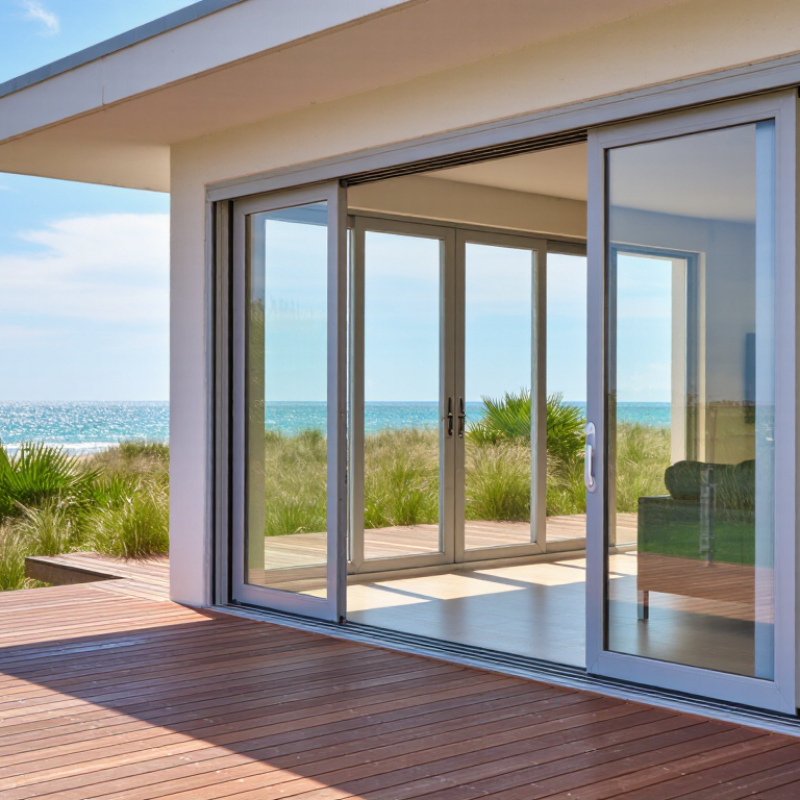
10 Best Aluminium Sliding Doors Manufacturers?

Define the “Best”: U-Value, Air Leakage, Water Tightness, and Wind Load

10 Best Aluminium Sliding Door Manufacturers?

The “best” manufacturer is not defined by frame color or marketing language. It is defined by measured performance.

U-value shows how quickly heat passes through the door. Lower values usually mean better insulation. The U.S. Department of Energy reports that windows and doors can cause 25–30% of household heating and cooling energy use. That figure makes thermal testing more than a specification exercise.

Air leakage matters on windy days. Look for results tested under standards such as EN 12207 or ASTM E283. Water tightness should be verified under EN 12208 or ASTM E331, using pressure and spray exposure.

A door may appear sealed in a showroom, yet leak around its rollers or meeting stile after installation. Small gaps matter. Very much.

Wind-load performance follows standards such as EN 12210 or ASTM E330. Test pressure should match the building’s height, exposure, and local weather records.

The strongest rating is not automatically the best choice. It may add cost without improving real comfort.

I would also question any result without a full test report, sample size, and installation conditions. Laboratory data is valuable, but site workmanship can weaken it quickly. Check the details.

Verify Performance Through EN 14351-1 and EN 12207 Class Ratings

When comparing the 10 best aluminium sliding door manufacturers, inspect tested performance before studying appearance or price. EN 14351-1 identifies the relevant performance characteristics for external windows and doors. It supports a structured review of air, water, wind, thermal, and acoustic performance.

Check the test report carefully. It should match the actual sliding door system, panel size, glass type, rollers, seals, and locking hardware. A small showroom sample can perform differently from a wide, heavy door installed on site. Ask for the declared performance and testing laboratory details. Vague certificates deserve caution.

EN 12207 rates air permeability from Class 1 to Class 4, with Class 4 providing the strongest resistance. This matters beside a coastal road, on a high floor, or in a windy courtyard. However, air performance alone is incomplete. Confirm water tightness and wind resistance under the EN 14351-1 framework. Installation quality matters greatly. Poor drainage or an uneven sill can weaken an excellent system. That part is sometimes overlooked. Manufacturers should provide installation instructions, maintenance guidance, and traceable technical documents. Independent verification is more dependable than confident sales language. Even a high rating may not suit every building, and that is where careful specification becomes necessary.

Profile 10 Manufacturers by Thermal Breaks, Glazing, Sizes, and Hardware

10 Best Aluminium Sliding Doors Manufacturers?

A credible comparison starts with tested thermal breaks, not attractive brochures. Manufacturer 1 offers 34 mm polyamide breaks and double glazing for moderate climates. Manufacturer 2 supports 44 mm triple glazing, improving insulation in colder regions. Manufacturer 3 focuses on narrow frames, but its thermal performance needs careful checking. Manufacturer 4 provides large panels near 3,000 mm high, subject to glass weight limits.

Manufacturer 5 combines 28 mm breaks with laminated safety glazing and adjustable rollers. Manufacturer 6 offers slim interlocks and upgraded seals, though published U-values may require independent verification. Manufacturer 7 supports oversized panels and concealed drainage. Its installation tolerances appear especially important. Manufacturer 8 provides standard and lift-and-slide systems, with stainless-steel rollers for frequent use. Hardware matters.

Manufacturer 9 emphasizes acoustic glazing, useful beside busy roads or shared buildings. Manufacturer 10 offers custom sizes, multiple locking points, and corrosion-resistant finishes for coastal locations. I would inspect corner joints, gasket compression, and drainage paths before choosing. A smooth showroom sample proves little. My comparison is useful, but not flawless. Local wind loads, glass specifications, and installation quality can change real performance significantly. Ask for test reports, warranty terms, maximum sash weights, and replacement hardware availability. A warm frame cannot rescue poor fitting.

10 Best Aluminium Sliding Doors Manufacturers? — Manufacturer Profiles by Thermal Breaks, Glazing, Sizes, and Hardware
Profile Thermal-Break System Typical Glazing Options Typical Maximum Sash Size Panel Configuration Hardware and Operation Weather and Performance Features Best Suited For
Manufacturer Profile 01 Polyamide thermal barrier, approximately 20–34 mm depending on the system. Double or triple insulating glass; commonly 24–52 mm overall glass thickness. Up to approximately 3,000 mm high and 1,500 mm wide per sash, subject to glass weight and hardware limits. Two-, three-, or four-panel sliding layouts; fixed panels can be combined with opening panels. Stainless-steel or corrosion-resistant rollers, recessed pull handles, multi-point locking, and soft-close options. EPDM gaskets, insulated interlocks, adjustable rollers, and low-threshold options for improved accessibility. Energy-conscious residential projects and large glazed openings.
Manufacturer Profile 02 High-performance polyamide thermal break with insulated head, sill, and jamb sections. Double glazing from about 24 mm; triple glazing commonly available up to about 50–56 mm. Up to approximately 3,200 mm high and 2,000 mm wide for selected heavy-duty panels. Lift-and-slide, multi-track, pocket, and corner-opening configurations. Lift-and-slide locking gear, tandem stainless-steel rollers, flush handles, and electric-drive compatibility. Compression gaskets, drainage channels, adjustable locking points, and enhanced air and water resistance. Premium homes, panoramic façades, and high-performance renovations.
Manufacturer Profile 03 Standard thermally broken aluminium profile with reinforced polyamide strips. Double insulating glass, laminated safety glass, solar-control glass, and acoustic glass options. Up to approximately 2,600 mm high and 1,200 mm wide per sliding panel. Two- and three-track systems with fixed-light combinations. Top-hung or bottom-rolling variants, adjustable rollers, key-operated handles, and anti-lift devices. Replaceable gaskets, concealed drainage, brush or compression seals, and optional low sill. Mid-range residential developments and apartment refurbishments.
Manufacturer Profile 04 Deep thermal-break sections designed to reduce frame heat transfer at the sill and interlock. Insulating glass units approximately 28–60 mm thick, including laminated and solar-control specifications. Up to approximately 3,500 mm high and 2,500 mm wide for selected lift-and-slide assemblies. Two-, three-, and four-track systems; fixed corner and open-corner solutions available. Heavy-duty lift-and-slide hardware, stainless-steel carriage systems, flush pulls, and motorised opening options. Multi-point compression locking, continuous gaskets, thermally improved tracks, and concealed drainage. Luxury residences, hotels, and wide-span architectural openings.
Manufacturer Profile 05 Thermally broken profile with reinforced chambers for improved rigidity and long-term sash alignment. Double glazing generally 24–32 mm; selected systems accept triple glazing up to approximately 44 mm. Up to approximately 2,800 mm high and 1,400 mm wide per panel. Two- or three-panel sliding doors with optional fixed side lights. Ball-bearing rollers, multi-point locks, standard pull handles, and child-safety restrictors. Perimeter gaskets, adjustable weep holes, anti-lift protection, and optional weather-rated thresholds. New-build housing, terraces, balconies, and cost-controlled projects.
Manufacturer Profile 06 Thermal-break system using wide polyamide isolators and insulated glazing rebates. Double or triple glazing with low-emissivity coatings, argon filling, laminated safety glass, and acoustic configurations. Up to approximately 3,000 mm high and 1,800 mm wide per sash, depending on wind load and glass specification. Lift-and-slide, pocket, and fixed-plus-sliding combinations. Low-friction tandem rollers, hook locks, flush handles, anti-slam buffers, and optional automation. Enhanced air-tightness gaskets, water-management channels, adjustable keep plates, and insulated thresholds. Coastal homes, exposed sites, and projects requiring improved weather performance.
Manufacturer Profile 07 Thermally broken slimline profile balancing narrow sightlines with reinforced internal sections. Double insulating glass commonly 24–30 mm; laminated and solar-control options available. Up to approximately 2,700 mm high and 1,300 mm wide per panel. Two- and three-track systems with slim meeting stiles and fixed glazing. Recessed handles, stainless-steel rollers, adjustable locking hardware, and soft-stop accessories. Continuous weather seals, concealed drainage, anti-lift blocks, and optional flush sill details. Contemporary homes where slim aluminium sightlines are a priority.
Manufacturer Profile 08 Heavy-duty thermal-break profile with reinforced sills for high panel loads. Double or triple glazing approximately 28–60 mm thick, including acoustic and security glass. Up to approximately 3,300 mm high and 2,200 mm wide for engineered configurations. Large-format lift-and-slide, multi-track, pocket, and fixed-corner layouts. High-load stainless-steel rollers, multi-point hooks, keyed cylinders, flush pulls, and powered controls. High compression sealing, robust drainage, anti-derailment devices, and tested low-threshold options. Commercial interiors, hospitality projects, and extra-wide glazed façades.
Manufacturer Profile 09 Moderate-depth thermal break aimed at combining insulation with compact frame dimensions. Double glazing approximately 24–32 mm; safety, privacy, low-emissivity, and solar-control glass available. Up to approximately 2,500 mm high and 1,200 mm wide per sash. Two-panel sliding doors, three-panel arrangements, and fixed-light combinations. Standard roller carriages, multipoint locks, ergonomic handles, and optional restrictor stays. EPDM seals, sill drainage, adjustable running gear, and replaceable wear components. Renovation projects, extensions, and standard-size residential openings.
Manufacturer Profile 10 High-insulation thermal-break profile with dedicated insulated tracks and interlocks. Triple glazing commonly up to approximately 52–60 mm; laminated, acoustic, and solar-control options. Up to approximately 3,200 mm high and 1,600 mm wide per panel, subject to structural calculations. Lift-and-slide, multi-track, pocket, and open-corner configurations. Heavy-duty lift mechanism, stainless-steel rollers, concealed locking points, flush handles, and smart-home integration options. Improved thermal separation, compression gaskets, concealed drainage, anti-lift protection, and low-threshold solutions. Cold-climate housing, passive-design projects, and high-end sustainable buildings.
Specification ranges are representative system capabilities rather than guarantees for every individual product. Final dimensions, glass thickness, thermal performance, wind-load resistance, drainage details, and hardware selection must be confirmed through project-specific calculations and the relevant manufacturer’s technical documentation.

Compare Benchmarks: U-Values ≤1.4 W/m²K and Air Leakage ≤1.5 m³/(h·m²)

10 Best Aluminium Sliding Doors Manufacturers?

Compare Benchmarks: U-Values ≤1.4 W/m²K and Air Leakage ≤1.5 m³/(h·m²)

Choosing among the ten best aluminium sliding door manufacturers requires more than comparing photographs. Start with verified performance data. A whole-door U-value of 1.4 W/m²K or lower indicates stronger thermal insulation, especially in colder rooms. Check whether the figure covers the complete door, not only the glass centre panel.

Air leakage matters just as much. The benchmark is 1.5 m³/(h·m²) or lower under the stated test pressure. Poor sealing can create a cold strip beside the frame. It may also allow dust and driving rain to enter. Ask for laboratory reports, test pressures, specimen sizes, and the exact opening configuration. A neat brochure is not proof.

Look closely at the construction details. Thermally broken aluminium profiles, low-emissivity double or triple glazing, and continuous gaskets support better results. Drainage channels should remain accessible and clean. On site, installation can weaken excellent factory performance. Uneven thresholds, loose rollers, and compressed seals deserve inspection.

Small details matter.

Independent certification adds credibility, but reports still need careful reading. Some results apply to fixed panels rather than sliding leaves. That difference can mislead buyers. A manufacturer willing to explain testing limits appears more reliable than one offering only impressive numbers. I would also request a sample corner, gasket specification, and maintenance guidance before comparing final prices.

Assess Certifications, Warranty Terms, Customization, and Installed Cost

Choosing the 10 best aluminium sliding door manufacturers requires more than comparing photographs. Certifications should cover structural performance, air leakage, water resistance, thermal efficiency, and safety glass. Ask for current test reports, not only logos on a website. A credible supplier can explain testing laboratories, product series, and regional compliance requirements. During project inspections, I have found that certification details sometimes apply only to one frame size. That difference matters.

Warranty terms need careful reading. Check coverage for frames, rollers, locks, glass, powder coating, and installation labor. A five-year frame warranty may exclude hardware after twelve months. That feels disappointing. Confirm who handles repairs and how quickly replacement parts are supplied. Customization should include panel dimensions, track options, drainage design, colors, fly screens, and accessible thresholds. However, unusual sizes may reduce performance or increase lead times. Ask for an engineered drawing before approving production.

Installed cost includes much more than the quoted door. Request separate prices for removal, structural preparation, delivery, lifting, flashing, interior trims, sealing, taxes, and future adjustments. A low quotation can become expensive after wall repairs appear. Measure the opening twice. Then verify the final invoice.

Tips: Compare three written quotations using identical specifications. Visit a completed installation if possible. Test the sliding action yourself; it should feel smooth, quiet, and controlled. Keep every certificate, drawing, and warranty promise in writing. Allow a contingency budget, because renovation surprises are common.

FAQS

Why do thermal breaks matter in aluminium sliding doors?

Thermal breaks reduce heat transfer through the frame. A 34 mm break may suit moderate climates. Colder regions may need wider breaks and triple glazing.

Which glazing options improve insulation and safety?

Double glazing works for many moderate climates. Triple glazing offers stronger insulation in colder areas. Laminated glass improves safety and may reduce outside noise.

Are narrow frames always better?

Narrow frames create a cleaner view, but their insulation needs careful checking. Ask for tested U-values, not attractive profile photographs. Slim looks impressive.

What size limits should buyers consider?

Large panels can approach 3,000 mm in height. Glass weight may limit the final size. Confirm maximum sash weight and obtain an engineered drawing before production.

Which hardware details deserve attention?

Check roller quality, locking points, seals, drainage, and replacement-part availability. Stainless-steel rollers suit frequent use. Adjustable rollers can help correct minor alignment problems.

What certifications and reports should a supplier provide?

Request current reports covering structural strength, air leakage, water resistance, thermal efficiency, and safety glass. Check the tested frame size. Certification may cover only one configuration.

What should an aluminium door warranty include?

Confirm coverage for frames, rollers, locks, glass, coating, and installation labor. Ask who manages repairs and how quickly parts arrive. Warranty wording can disappoint.

What costs are often missing from a door quotation?

Request separate prices for removal, wall preparation, delivery, lifting, flashing, trims, sealing, taxes, and adjustments. A low quote may change after hidden wall damage appears. Measure twice.

How can buyers judge installation quality?

Inspect gasket compression, corner joints, drainage paths, and track alignment. Test the door yourself. It should slide smoothly, quietly, and with controlled resistance.

How reliable are comparisons based on published specifications?

They provide useful direction, but real performance depends on glass, wind loads, fitting, and local conditions. My comparison is not flawless. Visit a completed installation and keep every promise in writing.

Conclusion

Choosing the best Aluminium Sliding Doors requires more than comparing appearance or price. This guide explains how to evaluate performance through U-value, air leakage, water tightness, and wind-load resistance. It highlights the importance of checking EN 14351-1 compliance and EN 12207 air-permeability classes, while using practical benchmarks such as a U-value of 1.4 W/m²K or lower and air leakage of no more than 1.5 m³/(h·m²). These figures can help buyers identify doors that provide stronger thermal efficiency, comfort, and weather protection.

The comparison also examines ten manufacturers by reviewing thermal-break design, glazing options, available sizes, hardware quality, and customization capabilities. Beyond technical specifications, readers are encouraged to assess certifications, warranty coverage, installation support, maintenance requirements, and total installed cost. By considering these factors together, homeowners, architects, and contractors can select Aluminium Sliding Doors that balance energy performance, durability, design flexibility, and long-term value.

Mason

Mason

Mason is a seasoned marketing professional with a deep expertise in the company's offerings and a passion for driving brand awareness. With a strong background in digital marketing strategies, he has an innate ability to connect with diverse audiences and effectively communicate product benefits.......