Tailored aluminum facade solutions designed to withstand Puget Sound marine exposure while delivering extreme thermal barrier efficiency.
Factory-assembled unitized curtain wall modules crafted for high-density Seattle commercial towers. Rapid jobsite erection with structural silicone glazing.
Send Inquiry Now
Incorporates double polyamide PA66 thermal struts, meeting WSEC energy codes with overall assembly U-factors down to 0.20 BTU/h·ft²·°F.
Send Inquiry Now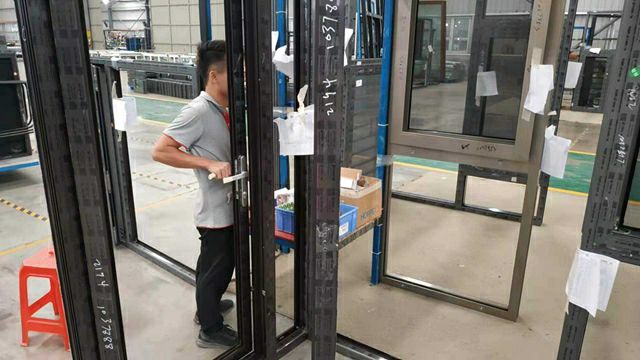
Engineered for the Cascadia Subduction Zone, offering dynamic racking resistance up to 3% story height displacement under seismic acceleration.
Send Inquiry Now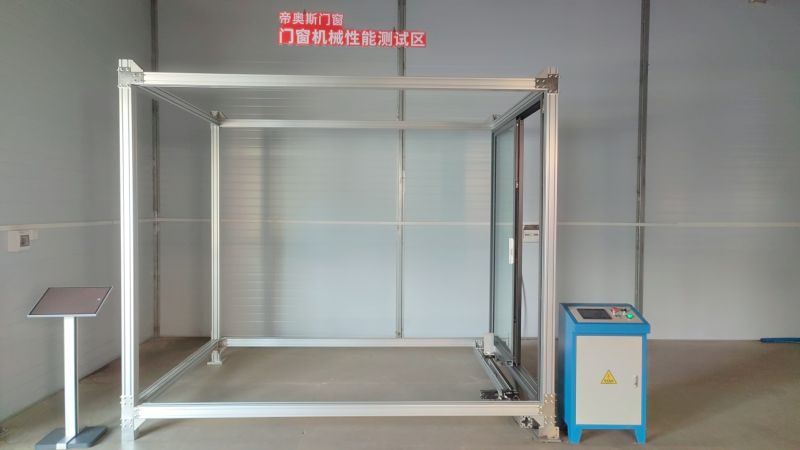
Features AAMA 2605 70% PVDF Kynar 500 coating and 316-grade stainless steel anchors to resist Puget Sound salt-spray atmospheric oxidation.
Send Inquiry NowAs Seattle continues its trajectory as a global innovation powerhouse—driven by massive expansions in South Lake Union, Downtown Bellevue, and the Denny Triangle—the demand for high-performance exterior building envelopes has intensified. Modern commercial developments, life science hubs, and luxury multi-family towers require sophisticated curtain wall framing that balances panoramic Puget Sound views with stringent environmental codes.
Operating under Climate Zone 4C (Marine West Coast), Seattle experiences unique environmental challenges: prolonged heating seasons, high relative humidity, persistent wind-driven precipitation from Elliott Bay, and intense urban acoustics. Furthermore, Washington State's aggressively updating building codes—notably the Washington State Energy Code (WSEC 2021/2024)—mandate low assembly U-factors and rigorous air barrier integrity. To satisfy these performance metrics without compromising architectural vision, general contractors and developers require specialized curtain wall manufacturing partners capable of producing high-precision aluminum extrusions, pressure-equalized rainscreen systems, and structural silicone glazed (SSG) assemblies.
Empowering Pacific Northwest Developers with End-to-End Architectural Facade Engineering.
Established in 2016, Dongguan Vigor Hardware & Window Co., Ltd. operates a massive 29,000-square-meter manufacturing plant. With 10 years of deep industry knowledge and 7 years of global export experience, our annual export volume totals $27 million. We export extensively to North America, the Caribbean, and Western Europe, focusing on coastal commercial projects, luxury residential developers, and local distributors.
To guarantee premium performance across North American job sites, our 38 QC inspectors perform strict hurricane impact tests, weatherproofing seal inspections, and thermal insulation assessments. Backed by 700 trusted supply chain partners, Vigor offers tailored customization including heavy-duty profiles, multi-point security locks, and acoustic laminated glass configurations. Driven by 45 R&D engineers, we developed and released 48 new window and curtain wall systems last year, maintaining our market leadership in advanced architectural fenestration.
Solving complex challenges in seismic drift, moisture intrusion, and thermal bridging.
Seattle is located within the Cascadia Subduction Zone, subjecting high-rise building facades to lateral sway and dynamic inter-story drift during seismic events. Vigor’s unitized curtain wall systems incorporate internal expansion joints, slotted anchor brackets, and flexible structural silicone bonds capable of absorbing dynamic displacements exceeding ±3.0% story height (AAMA 501.4 & 501.6 tested) without glass breakage or weather seal rupture.
Driven by frequent maritime rainstorm fronts off Elliott Bay and Puget Sound, rainscreen effectiveness is paramount. Our stick and unitized facades utilize a pressure-equalized rainscreen principle (AAMA 501.1 & ASTM E331). Air cavities behind the exterior rain screen vent to the outside, equalizing internal and external pressures to prevent wind-driven rain from penetrating the inner drainage zone.
Under the Washington State Energy Code (WSEC), overall fenestration U-factors must meet ultra-low thresholds. Vigor utilizes wide polyamide (PA66 GF25) thermal breaks, warm-edge silicone foam spacers, and argon-filled double or triple Low-E insulated glass units (IGUs). This reduces frame conductive thermal bridging, preventing interior surface condensation during cold Seattle winters.
With downtown Seattle high-rises situated adjacent to active transit lines, interstate highways (I-5/I-90), and light rail systems, controlling sound transmission is critical. By combining asymmetric laminated glass configurations (e.g., 6mm exterior + PVB + 8mm interior) and acoustic perimeter gaskets, Vigor curtain walls achieve impressive ratings up to STC 44 / OITC 36.
| Performance Metric | Test Method / Standard | Vigor Seattle System Benchmark | Architectural Benefit |
|---|---|---|---|
| Air Infiltration | ASTM E283 | < 0.06 cfm/ft² @ 6.24 PSF (300 Pa) | Eliminates drafty envelopes, lowers HVAC load |
| Static Water Penetration | ASTM E331 | No Leakage @ 15.0 PSF (720 Pa) | Prevents moisture damage during severe PNW storms |
| Dynamic Water Penetration | AAMA 501.1 | Passes at 15.0 PSF Dynamic Wind Pressure | Protects against turbulent high-rise wind driven rain |
| Structural Performance | ASTM E330 | Design Pressure ±60 PSF to ±100 PSF | Engineered for high-altitude wind load resistance |
| Thermal Transmittance | NFRC 100 / ANSI 1515 | U-factor: 0.18 – 0.24 BTU/h·ft²·°F | Surpasses WSEC 2021 commercial energy targets |
| Seismic & Inter-story Drift | AAMA 501.4 / AAMA 501.6 | Passes Serviceability & Ultimate Drift Tests | Ensures occupant safety during earthquake events |
Every curtain wall extrusion, glass panel, and mechanical seal undergoes multi-stage laboratory validation before ocean export.
In-Process Quality Control (IPQC) verifies profile dimension tolerances, wall thickness precision, and structural silicone adhesion during live production.
Evaluates tensile strength, shear resistance, and structural integrity of alloy extrusions and corner joining hardware under max loads.
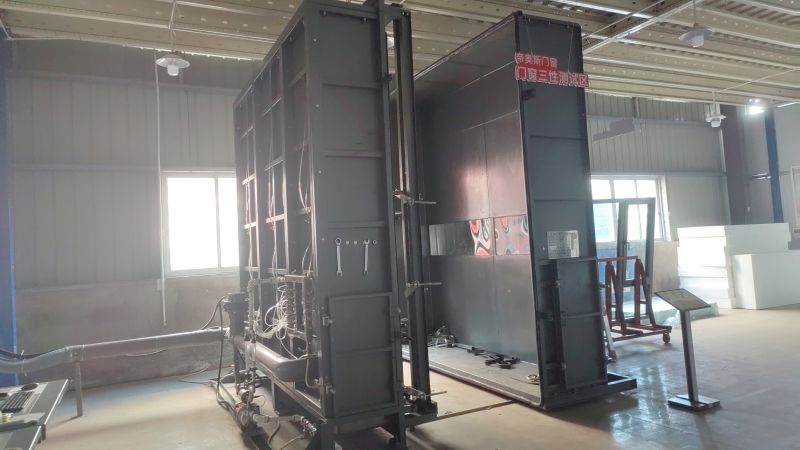
Simulates high-velocity gust pressures up to 120 PSF, guaranteeing deflection limits (L/175 or L/240) comply with US structural codes.
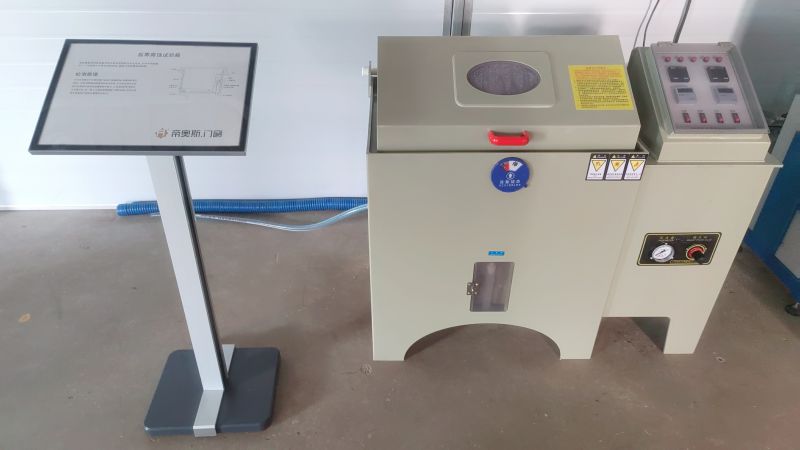
Accelerated corrosion chamber testing ensures surface finishes (PVDF Kynar 500 & Anodized) withstand saltwater atmospheres along Elliott Bay.
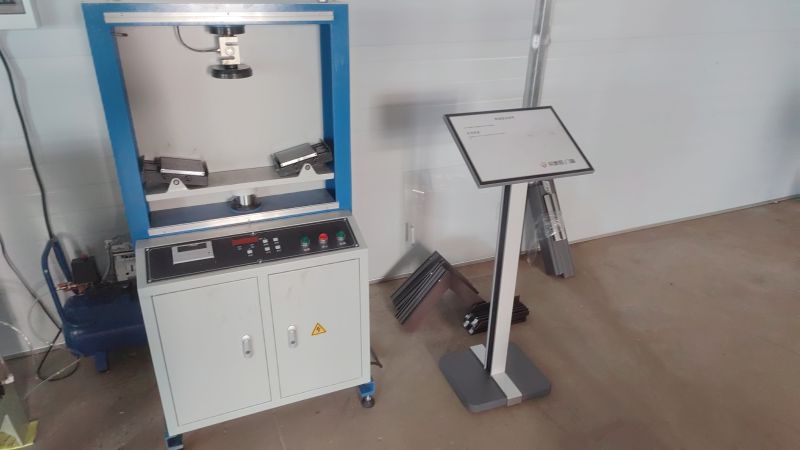
Measures corner joint stiffness and torque resistance in curtain wall frame assemblies to eliminate long-term sag and frame rack distortion.
Architectural facade engineering designed for diverse commercial and residential applications across Puget Sound.
High-density office towers requiring rapid on-site assembly, high daylight harvesting, low SHGC glass coatings, and continuous fresh-air ventilation integrated with automated parallel opening vents.
Luxury residential high-rises prioritizing acoustic privacy against urban street noise, thermal comfort, panoramic mountain/lake vistas, and sleek slim-profile framing aesthetics.
Structures facing harsh marine environments along Elliott Bay and Shilshole Bay. Demands non-corrosive fasteners, heavy anodized or fluoropolymer coatings, and dynamic rain-driven sealing.
Explore our complete engineering catalog customized for Seattle architects, developers, and general contractors.
Heavy-duty commercial entrance doors engineered for high traffic, equipped with multi-point hardware and thermal break thresholds.
Send Inquiry Now
Polycarbonate architectural cladding providing diffused daylighting, high thermal insulation, and extreme impact resistance.
Send Inquiry Now
Versatile stick-built framing designed for complex geometric facades, low-to-mid rise offices, and customized atrium glazing.
Send Inquiry Now
Designed to achieve ultra-low U-factors required for Passive House and net-zero commercial projects across Washington state.
Send Inquiry Now
4-sided structural silicone glazing providing seamless glass exterior aesthetics with maximum daylight exposure.
Send Inquiry Now
Heavy-gauge aluminum mullions treated with fluoropolymer coatings for salt-fog durability along coastal shorelines.
Send Inquiry Now
High-moment-of-inertia mullions designed to span large vertical clear openings in hotel lobbies and retail podiums.
Send Inquiry Now
Combines retail ground-floor storefront functionality with upper-level unitized curtain wall transitions.
Send Inquiry NowLeading the shift toward decarbonized, smart, and energy-positive building envelopes in the Pacific Northwest.
Integrating semi-transparent solar photovoltaic glass into vision and spandrel zones, transforming Seattle skyscrapers into active urban power generators without sacrificing aesthetic fluidity.
Incorporating ultra-thin VIG units achieves center-of-glass U-factors as low as 0.06 BTU/h·ft²·°F in slim profiles, revolutionizing thermal performance for cold marine climates.
Automated solar tinting glass managed by AI building control systems, dynamically reducing glare and cooling loads during Seattle’s peak summer solar radiation periods.
Key technical considerations for architects, structural engineers, and general contractors sourcing custom facade systems.
Connect directly with Dongguan Vigor's facade engineering team for structural calculations, thermal modeling reports, custom architectural CAD/BIM shop drawings, and wholesale manufacturing quotes.
 Vigor Window